
Rhetoric versus Reason
Paradise LostThis flow traces how persuasive speech repeatedly reframes reality, from Satan's political arguments to Adam's final acceptance of disciplined wisdom.
increasing Bearing strength in each event
 decreasing
Bearing strength in each eventdecreasingSatan's Political Language
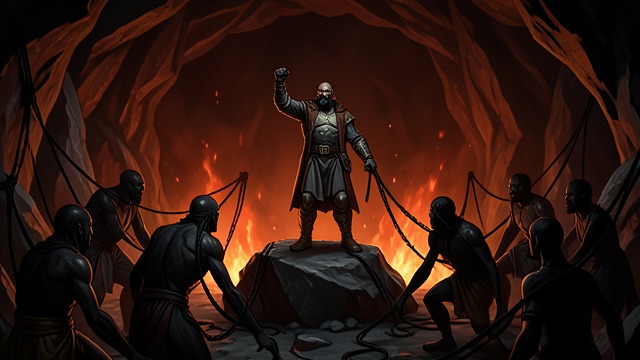
Satan's Political Language
Freedom defined as independence
Satan presents service to God as slavery and self-rule in Hell as liberty. The rhetoric is powerful because it borrows the language of dignity while severing freedom from truth.
Audience captured
His speeches convert defeat into shared identity. The infernal host accepts a narrative in which wounded pride becomes principled resistance.
Belial's Smooth Sophistry
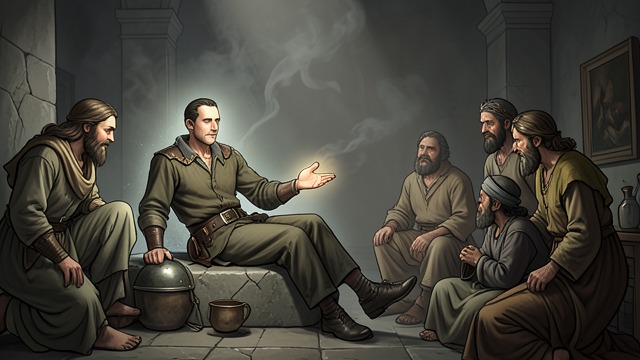
Belial's Smooth Sophistry
Ease called wisdom
Belial argues that endurance and adaptation may make Hell tolerable. His reasoning sounds moderate because it avoids the obvious recklessness of open war.
Moral evasion
The speech never confronts the injustice of rebellion. It replaces repentance with comfort and therefore protects the fallen will while pretending to counsel peace.
The Serpent's Proof

The Serpent's Proof
Experience as authority
Satan claims that the Serpent tasted the fruit and survived, treating apparent experience as stronger evidence than divine warning. Eve accepts the result without examining the hidden cost.
Logic inverted
The argument changes ignorance into deprivation and prohibition into proof of envy. Reason remains active, but its premises have been corrupted by desire.
Adam's Counterreason

Adam's Counterreason
Prudence argued
Adam explains that temptation need not be sought and that virtue is safest when it avoids unnecessary exposure. His reasoning recognizes the difference between proving freedom and using freedom well.
Consent through weakness
Despite the soundness of his argument, Adam cannot maintain it against emotional pressure. The episode shows that correct reasoning does not guarantee correct action.
Wisdom Recovered

Wisdom Recovered
Knowledge subordinated
Adam learns that remote speculation matters less than obedience, faith, virtue, and charity. Wisdom becomes a practical alignment of thought and conduct.
Reason restored
The final victory is not silence or anti-intellectualism. It is reason liberated from vanity and placed within love, reverence, and dependence upon God.
during the Infernal Council
during Belial's speech in the Infernal Council
during the temptation of Eve
during Adam's debate with Eve before separation
near the conclusion of Michael's teaching
